 listicle
Best Artisanal Gifts for Families: 7 Unique Picks
Table of Contents
- Why Artisanal Gifts Work for Families
- How to Choose Artisanal Gifts by Recipient and Budget
- 7 Unique Family Gifts That Feel Personal
- Handmade Gifts for Families: What Provenance Really Means
- Family Gifts That Have Everything: Experience and Consumable Ideas
- Ethical Gifts That Give Back: Supporting Independent Makers
- Shipping, Lead Times, and Holiday Ordering Deadlines
- Frequently Asked Questions
Last Updated: October 18, 2026
Why Artisanal Gifts Work for Families
Artisanal gifts are objects made in small batches by individual makers, where handwork, material quality, and traceable authorship matter more than volume. That matters for family gifts, which get seen every day, not just on the morning they're unwrapped.
At Palms 30A, the presents people remember are rarely the most expensive ones. They're the ones with a story and a name behind them: a hand-painted plate that becomes the oyster platter at every gathering, a ceramic flower holder that lives on the windowsill for a decade.

A family gift also has to survive several people's opinions at once. Grandparents, teenagers, and a five-year-old all have to use the same object without anyone feeling like they got the leftover present.
How to Choose Artisanal Gifts by Recipient and Budget
Start with the household, then set a number. Budget first and recipient second is how people end up with a beautiful object nobody can use.
Match the Gift to the Household
Ask three questions before you shop. Who lives there, what do they do together, and what do they already own too much of?
- Young families with babies and toddlers: a soft, washable blanket or a heatable plush beats anything fragile. The Cross Blanket is plush chenille with a cross design, built to survive repeated washing, and it works as a nursery gift or a christening present.
- Families with older kids and teens: games and puzzles that pull everyone to the table. The Let's Play Mahjong 1000 Piece Puzzle is a 1000-piece puzzle with gold foil detailing, finished size 24" x 24", recommended for ages 13 and up.
- Hosts and home entertainers: tabletop pieces. The Confetti Coast Oyster Plate is a handcrafted 9" round plate with hand-painted details on porcelain, made for serving oysters and appetizers or simply displayed.
A common mistake is buying for the person you know best and handing it to the whole household. If the gift lives in a shared room, buy for the room.

Set a Budget Tier Before You Shop
Transparent tiers keep you from drifting upward while browsing.
| Tier | Typical Spend | What It Buys | Best For |
|---|---|---|---|
| Small token | Under $40 | Ceramic flower holder, heatable plush | Coworkers, teachers, kids' friends |
| Mid-range | $40-$60 | Puzzle, baby blanket | Nieces, nephews, family gift exchanges |
| Statement | $100-$200 | Hand-painted oyster plate, art book | Parents, in-laws, milestone occasions |
Set the tier first, then pick within it. The Artichoke Flower Holder sits at $32, the puzzles at $36 and $40, the Cross Blanket at $45, the Mother And Child Book at $105, and the oyster plates at $179 in cream or pink.
7 Unique Family Gifts That Feel Personal
These seven picks cover the range a real family needs, from a $32 hostess gift to a statement piece.
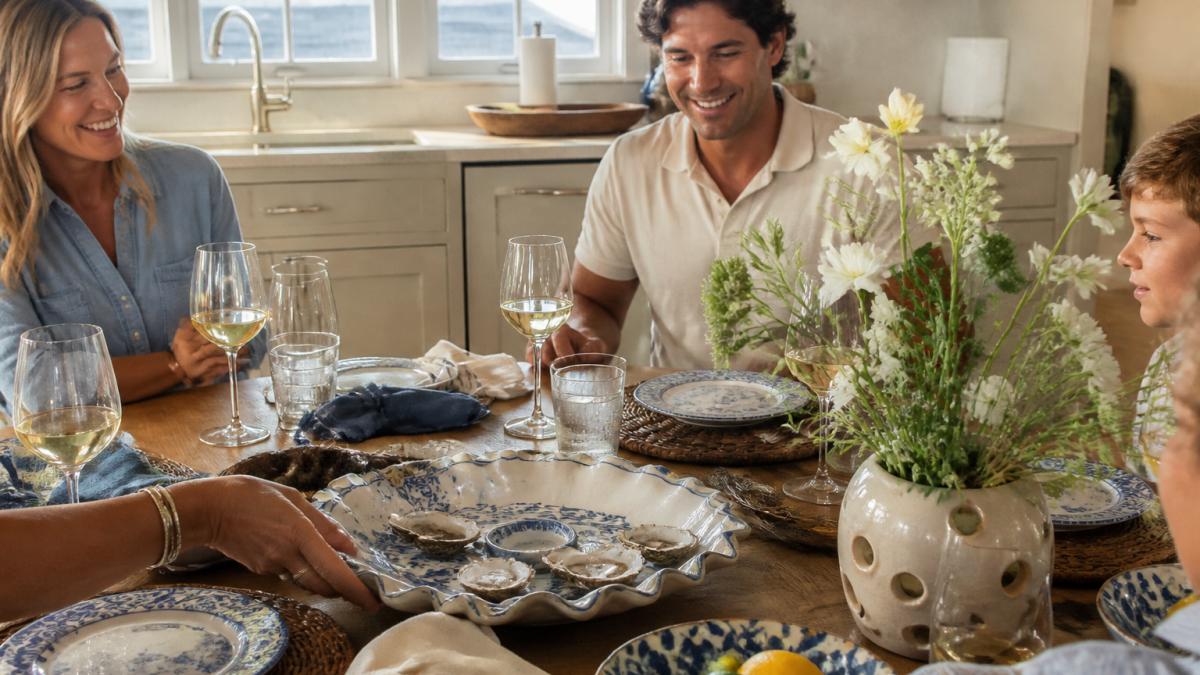
- Confetti Coast Oyster Plate in Cream ($179). Handcrafted porcelain with hand-painted detail, 9" round. Our pick for the family that hosts. It works as a serving piece and as a decorative accent between meals.
- Confetti Coast Oyster Plate in Pink ($179). Same construction, warmer palette. Buy this one if the household leans colorful, or split the pair between two siblings.
- Let's Play Mahjong 1000 Piece Puzzle ($36). Art by Teresa Chan, sage green and powder pink palette, gold foil finish. The finished square is displayable, which is rare for a puzzle.
- Pajama Party 1000 Piece Puzzle ($40). A technicolor sleepover scene. Thick stock, high-quality art paper, recycled puzzle board. Note the listing: not suitable for children.
- Romaine Holiday 1000 Piece Puzzle ($40). Oysters, pasta, martinis, and dessert, drawn as a celebration of dining out. Our pick for the family that plans vacations around restaurants.
- Cozy Cute Dragon Warmies ($29.99). Heatable, weighted, and scented with real French lavender. Microwave it warm or freeze it for cooling relief. Safe for all ages, 9" tall.
- Cross Blanket ($45). Plush chenille by Mud Pie, with a cross design. The practical choice for a new baby in the family.
Handmade Gifts for Families: What Provenance Really Means
Provenance is the documented chain of who made an object, where, and from what materials. In gift buying, it's the difference between "handmade" as a marketing word and handmade as a fact you can repeat to the recipient.
The Federal Trade Commission's guidance on "Made in USA" and origin claims is a useful reference point here. Origin and manufacturing claims are held to a standard, which means a seller who says handcrafted should be able to describe the handwork involved.
The Three-Tier Provenance Test
Use this before you pay for the word "artisanal." Each tier is a question the seller should answer plainly.
| Tier | Question to Ask | What a Strong Answer Sounds Like | Red Flag |
|---|---|---|---|
| 1. Material | What is it made of, specifically? | "Hand-painted porcelain," "stoneware," "100% cotton chenille," "recycled puzzle board" | "Premium materials," "artisan-quality blend" |
| 2. Handwork | Which step did a person do by hand? | "Each plate is hand-painted, so no two are identical" | "Handcrafted style," "artisan-inspired" |
| 3. Authorship | Who or what studio made it? | A named artist, studio, or maker with a location | No maker named anywhere on the page |
If a listing clears all three, the provenance claim is defensible. If it clears only one, treat the word "artisanal" as decoration.
What Handwork Actually Looks Like by Material
Provenance claims are easiest to verify when you know what handwork looks like in each material category.
- Porcelain and ceramic. Look for language about hand-painting, hand-throwing, or hand-glazing, and expect slight variation between pieces. A hand-painted oyster plate will show small differences in brushwork; that variation is the evidence. A perfectly identical set of "hand-painted" plates at scale is a warning sign.
- Textiles. Hand-finished or small-batch textiles usually disclose fiber content and care instructions. Machine-woven plush chenille is still legitimate, but the maker should say so rather than implying hand-weaving.
- Puzzles and paper goods. Art by a named illustrator, high-quality art paper, and recycled board are checkable specifics. A puzzle that names its artist (for example, Teresa Chan on the Let's Play Mahjong puzzle) gives you a provenance detail for the gift card.
Why This Matters More for Family Gifts
A family gift gets handled by more people, more often, than a single-recipient gift, raising the stakes on two questions:

- Durability tied to material. A hand-painted porcelain plate used as a serving piece needs to survive a dishwasher debate; a plush chenille blanket in a household with a toddler needs to survive repeated washing. Ask how the piece should be cleaned, and treat "hand wash only" as a real constraint, not a footnote.
- Age suitability tied to construction. Small hand-painted details, fragile glazes, and weighted plush interiors carry different age considerations. A heatable, weighted lavender plush is a different object for a newborn than for a five-year-old, and the listing should say so.
Family Gifts That Have Everything: Experience and Consumable Ideas
The hardest household to buy for already owns everything. Give them something used up or shared instead.
Experience gifts work because they create an occasion.
Consumables follow the same logic.
Confetti Coast Oyster Plate - Cream →
For the family that wants for nothing, a cloth-bound art book beats another kitchen gadget.
If you're visiting the family, ship the gift ahead and let them open it in person.
Ethical Gifts That Give Back: Supporting Independent Makers
Ethical gifting starts with one question: where did the money go? Buying from an independent maker sends more of the purchase to the person who did the work than buying an identical-looking item from a large production run. But "support independent makers" is easy to say and hard to verify, so here are the mechanisms behind the claim.
How Maker Impact Actually Works
A small studio's economics differ from a mass producer's in three concrete, checkable ways.
- Batch size. A maker producing in small batches prices for the actual labor hours in each piece. That is why a hand-painted porcelain plate costs more than a factory-printed one: you are paying for handwork time, and the maker is not spreading tooling and design costs across tens of thousands of units.
- Named authorship. Independent makers publish specifics because those details are the product: material, size, finish, and often the artist's name. That transparency makes a gift defensible when someone asks where it came from.
- Direct margin. When you buy from a maker or a shop that names the studio, a larger share of the price stays with the person who did the work than when the object passes through a large production and retail chain. You cannot audit the exact split, but you can check whether the maker is named and whether the shop describes its relationship to them.
Comparing Materials Ethically
Material choice is where ethical gifting gets concrete. There's no universally "good" material, only trade-offs.
| Material | Ethical Consideration | Family Durability Note |
|---|---|---|
| Porcelain and ceramic | Fired at high temperature, long use life if cared for | Fragile; check dishwasher and microwave guidance |
| Cotton and chenille textiles | Fiber origin and dye process vary widely; ask if organic or recycled content matters to you | Washability matters more than fiber for a household with young kids |
| Recycled puzzle board and art paper | Recycled content is a checkable claim; ask for the percentage if it is stated | Thick stock and quality art paper affect how the finished puzzle holds up |
| Cloth-bound books | Paper sourcing and binding quality determine use life | A shelf object, not a storage problem |
A practical rule: prefer objects with a long use life over novelty items that get discarded. A hand-painted serving plate that becomes the holiday platter every year has a better material story than a seasonal novelty that lasts one December.
How to Verify a Give-Back Claim
"Give back" and "ethical" aren't regulated the way "Made in USA" origin claims are, so verification is on the buyer. Three checks cover most cases:
- Name the recipient. A credible give-back claim names the organization or cause and describes the mechanism (a percentage of sales, a specific program, a donation per item). A vague "a portion of proceeds goes to charity" is not verifiable.
- Check the maker, not just the mission. A shop can have a strong mission and a thin maker story. Look for both: who made the object, and where the money goes.
- Match the claim to the product. A give-back claim attached to a mass-produced item is a different proposition than one attached to a small-batch handmade piece. The provenance test in the previous section is the tiebreaker.
A Family-Specific Ethical Checklist
Before you buy an "ethical" family gift, run these five checks:
- Is the artist or studio named on the product page?
- Is the material described plainly (porcelain, chenille, ceramic, recycled board)?
- Is the handwork step described in one sentence?
Shipping, Lead Times, and Holiday Ordering Deadlines
Timing ruins otherwise good gift choices. Build a buffer into every order, especially for handmade pieces.
A working schedule for holiday gifting:
| Window | Action | Why It Matters |
|---|---|---|
| 4-6 weeks out | Order handmade and personalized items | Small-batch production has limited stock |
| 3 weeks out | Confirm shipping address and delivery estimate | Catches address errors early |
| 2 weeks out | Ship to a local address, not your own | Avoids re-shipping delays |
| 1 week out | Switch to in-store pickup where available | Removes carrier risk entirely |
For families visiting the area for a week, ordering online after you leave is usually the simplest path: the gift ships to your home address and the memory of the trip stays attached to it.
One more buffer worth building: order fragile pieces like porcelain plates earlier than soft goods. A blanket that arrives late is a minor inconvenience. A hand-painted plate that arrives cracked is a return.
Frequently Asked Questions
What is a good artisanal gift for a family that has everything?
Focus on consumable or experience-based items rather than more objects. A 1000-piece puzzle like the Let's Play Mahjong puzzle ($36.00) gives the family an evening of shared activity, while a hand-painted oyster plate ($179.00) upgrades a routine they already do together, like hosting. Both avoid the clutter problem that plagues families who already own plenty. The key is choosing something that creates a moment rather than adding to a shelf.
What makes a gift artisanal?
An artisanal gift is made in small batches by an identifiable maker, with visible handwork such as hand-painting, hand-throwing, or hand-finishing. Look for specific material descriptions (premium porcelain, plush chenille, recycled board) and named artists or studios. A hand-painted 9-inch oyster plate tells you more about provenance than a vague 'handcrafted' label. Ask who made it and how, and treat that answer as the real test of whether a gift earns the artisanal label.
What are good handmade gifts for families with young children?
Prioritize soft, safe, and washable items. The Cross Blanket ($45.00) is a plush chenille baby blanket built to last through repeated washes, and the Cozy Cute Warmies plush ($29.99) is safe for all ages, microwaveable, and scented with real French lavender. Both work as handmade gifts for families because they combine craft with daily usefulness. Skip anything fragile or dry-clean-only for households with toddlers.
How do you choose a gift the whole family can enjoy?
Pick something with more than one use. A hand-painted oyster plate can serve appetizers or display as decor, and a 1000-piece puzzle becomes a group activity before it becomes wall art. Check the age guidance too: the Mahjong puzzle is recommended for 13 and up, while the Warmies plush is safe for all ages. Matching the item to the youngest and oldest person in the house prevents a gift that only one person touches.
When should you order artisanal gifts for the holidays?
Order handmade and small-batch items earlier than mass-produced gifts, because makers hold limited stock and personalization adds days to fulfillment. For holiday gifts, aim to order by early December so there is buffer for shipping delays. If you are buying after a trip or ordering from out of town, confirm the shipping window before checkout and ask whether the item ships from stock or is made to order. Build at least a week of slack into your timeline.
Families are hard to shop for because one gift has to work for several people at once, and that's exactly where a curated, maker-led selection helps. Palms 30A carries a curated collection of clothing, gifts, and home accessories alongside a handcrafted jewelry collection and original art pieces, so you can match a gift to a household rather than guessing. Browse the full collection and find the piece that fits the family on your list.