 listicle
Curated Coastal Style: Skip Fast Fashion, Shop Better
Table of Contents
- What Defines the Coastal Aesthetic Beyond Anchors and Rope
- Curated Coastal Style: Color Palettes and Natural Textures That Last
- Sustainable Coastal Clothing Brands: What to Look For
- Ethical Home Decor Sources and Supply Chain Transparency
- Curated Coastal Style Picks: Clothing and Accessories by Budget
- Artisan Home Decor Picks: From Entryway to Kitchen
- How to Care for Coastal Pieces So They Actually Last
- Conclusion
Last Updated: August 13, 2026
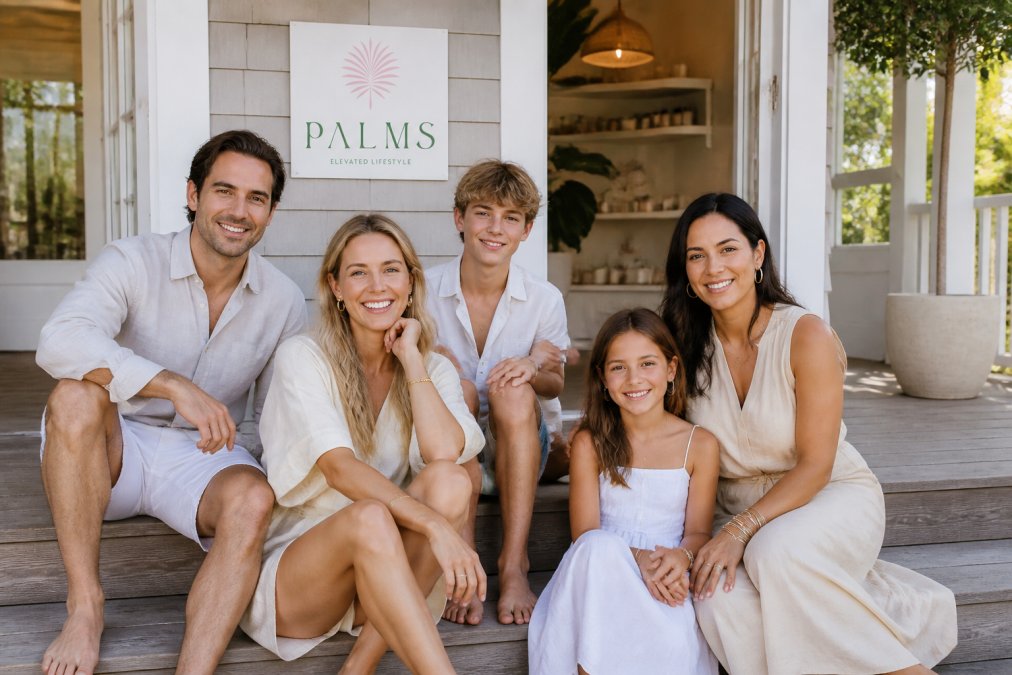
Most coastal-inspired shopping guides are built around affiliate links to mass-produced anchor prints and cheap wicker baskets that fall apart by September. At Palms 30A, we've curated a different approach: one that asks where each piece comes from, how long it will last, and whether the aesthetic holds up five years from now. This guide answers the question that actually matters, where can you find curated coastal style that isn't fast fashion, and gives you a practical framework for shopping better, not just buying more.
The sustainable coastal niche has matured considerably. Artisan makers, ethical home goods brands, and boutiques focused on longevity over trend cycles are easier to find than ever. The harder part is knowing what to look for.
What Defines the Coastal Aesthetic Beyond Anchors and Rope
The coastal aesthetic is rooted in natural materials, soft light, and the unhurried feeling of life near water. It draws from textures of the shoreline, bleached driftwood, sea glass, woven grasses, salt-faded cotton, rather than nautical iconography like anchors and lighthouse prints.
True coastal living style is quieter, more durable, and deeply tied to natural materials that age well. The defining characteristics include:
- Organic textures: rattan, jute, seagrass, linen, and unfinished wood
- A restrained color palette: soft blues, warm whites, sandy neutrals, and occasional coral or sage
- Handcrafted or artisanal pieces that show the maker's hand
- Versatility: pieces that work in a beach house and a suburban living room
- Timeless design over trend-driven novelty
Coastal style is actually one of the more sustainable aesthetics available, because its best expressions were never about fast fashion or disposable decor to begin with.
Curated Coastal Style: Color Palettes and Natural Textures That Last
Curated coastal style works because it commits to a palette and material language that don't date. The choices you make here determine whether your wardrobe and home feel cohesive a decade from now.
Soft Blues, Neutrals, and Coral: Building a Timeless Palette
The most enduring coastal interiors share a tight color story: soft blues ranging from pale sky to deep ocean, warm whites and sandy beiges as the foundation, and accent notes of coral, terracotta, or sage green. This palette mirrors the actual colors of the shoreline rather than a stylized version.
For clothing, invest in linen separates in natural and white, add soft blue layers, and use a coral or warm orange piece as the accent. For home decor, use neutral walls and textiles, blue and white ceramics as the mid-layer, and one or two warm-toned accent pieces.
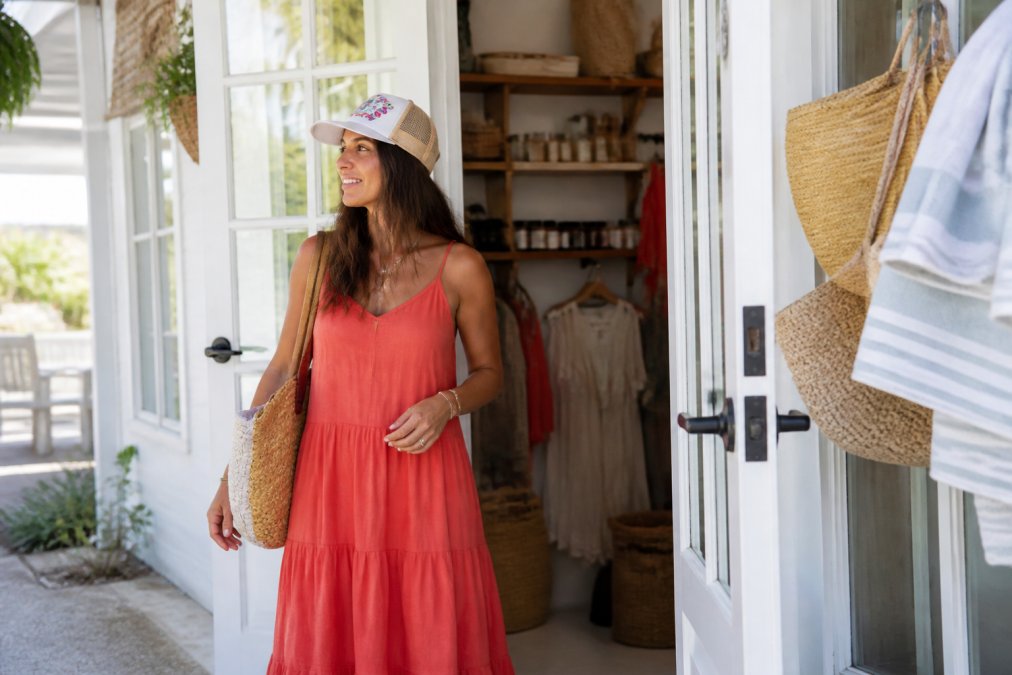
Coral bridges warm and cool tones without screaming "nautical." The Coral Strovia Maxi ($109) is a flowing silhouette in a rich coral hue that pairs with sandals for daytime and simple jewelry for evening.
Rattan, Jute, Linen, and Woven Details: Why Material Matters
Natural materials are the backbone of the coastal aesthetic and where the sustainability argument becomes concrete. Rattan, jute, and seagrass are rapidly renewable plant fibers. Linen comes from flax, which requires significantly less water than cotton, according to the European Flax and Hemp Association's fiber guide. Organic cotton eliminates the synthetic pesticide load of conventional cotton farming.
These materials last. Rattan furniture outlasts injection-molded plastic by decades. A well-made linen dress softens and improves with washing. Jute rugs develop character over time. Woven details signal craft investment, they take time to produce and don't survive the cost-cutting of fast production runs.
| Material | Best For | Why It Lasts | Care Note |
|---|---|---|---|
| Linen | Clothing, bedding, table linens | Gets softer with each wash | Machine wash cold, air dry |
| Rattan | Furniture, baskets, decor accents | Flexible, strong, repairable | Dust regularly, avoid prolonged moisture |
| Jute | Rugs, totes, woven accents | Dense natural fiber, biodegradable | Spot clean only, keep dry |
| Organic cotton | Everyday clothing, kitchen textiles | Durable without synthetic finishes | Machine wash, avoid high heat |
| Seagrass | Floor coverings, baskets | Extremely hard-wearing | Vacuum regularly, blot spills immediately |
Sustainable Coastal Clothing Brands: What to Look For
Sustainable coastal clothing brands are defined by material transparency, ethical manufacturing, and design longevity. When evaluating brands, look for:
- Certified materials: GOTS (Global Organic Textile Standard) for organic cotton, OEKO-TEX for tested chemical safety
- Named manufacturing partners: brands that can tell you where garments are cut and sewn
- Slow fashion pricing: pieces priced to reflect real labor costs
- Repair and return programs: brands that stand behind products long-term
The Textile Exchange's annual materials benchmark is useful for understanding which fiber certifications carry real weight. A linen dress made in an unregulated factory with no labor protections is not ethically made, regardless of the fiber. Sustainable brands address both material and making.
A Capsule Wardrobe for Coastal Climates
A capsule wardrobe for coastal climates solves a specific problem: dressing for heat, humidity, salt air, and sudden weather shifts without overpacking. The goal is ten to fifteen pieces that cover every situation.
The coastal capsule, built for longevity:
- 2 linen or cotton button-down shirts (white and a soft stripe)
- 1 versatile cover-up (the Patchwork Palm Cove Cover-Up at $75.60 works over swimwear or as a standalone piece)
- 1 maxi dress in a warm neutral or coral
- 1 mini dress in a print that doesn't read as costume
- 2 pairs of shorts in neutral tones
- 1 lightweight cardigan or layer for evening
- 1 wide-brim hat for sun protection
- 1 canvas tote that doubles as a beach bag
- Sandals and one pair of closed-toe shoes
Fewer, better pieces mean less laundry, less decision fatigue, and far less waste.
Ethical Home Decor Sources and Supply Chain Transparency
Supply chain transparency is the single biggest gap in the ethical home decor market. Many brands describe products as "handcrafted" or "artisanal" without verifiable information about who made them or where.
Ethical home decor sources answer three questions: Who made this? What is it made from? How was it finished or treated? Look for:
- Artisan partnerships: brands that name the makers or cooperatives they work with
- Material sourcing documentation: where raw materials originate
- Finish transparency: what dyes, sealants, or treatments are used
- Fair pricing: pieces priced to reflect real craft labor
Second-Hand and Vintage Coastal Sourcing
Second-hand and vintage sourcing is the most sustainable option available. Vintage rattan furniture, hand-thrown coastal ceramics, and deadstock linen textiles carry material quality that current fast-home-goods production can't match at scale.
Practical sources include estate sales in coastal communities, antique markets for hand-thrown pottery, online resale platforms for vintage linen, and thrift stores in beach towns. Vintage sourcing requires patience and a clear sense of what you're looking for, go in with your palette and material criteria already defined.
Curated Coastal Style Picks: Clothing and Accessories by Budget
The best curated coastal style doesn't require a large budget. It requires knowing which categories to invest in and which to buy affordably.
Under $30: Everyday Beach-Inspired Accessories
Accessories are the right place to spend less. They're worn hard and benefit from being replaced as they wear out. Choose pieces with genuine coastal character rather than novelty prints.
Palms 30A picks under $30:
- Salty Embroidered Trucker Hat - White, $24: Canvas construction with mesh back panels and adjustable snapback. The embroidered detail is understated enough to work beyond the beach.
- LOCAL Oyster Shell Trucker Hat, $24: Available in nine colors, with structured foam front panel and oyster shell graphic that references the actual coastal ecosystem.
- Coastal Calming Seas Trio Kitchen Towel, $11: Cotton fabric with embroidered coastal design. A functional piece that adds character without demanding attention.
- Custom Designed Seashell, $22: Each piece is individually handcrafted. No two are identical.
$30-$80: Versatile Pieces That Work Hard
Pieces in this range should earn their place by working across multiple contexts and holding up to repeated use.


- Meadow Line Doormat, $35: Blue and white botanical design with durable construction for daily foot traffic.
- Beach Tote - Gulf Cluster, $48: Heavyweight polyester canvas, water-resistant lining, interior zipper and slider pockets. Kim Hovell original artwork print. Dimensions: 24 x 16 x 7.5 inches.
- Patchwork Palm Cove Cover-Up, $75.60: Lightweight and versatile. Works over swimwear or as a standalone piece.
$80-$120: Investment Dresses and Statement Pieces
Investment pieces should be made from materials that improve with wear and cut in silhouettes that don't date.

- Maldives Bloom Mini Dress, $98: Breathable fabric, flattering silhouette, bloom-inspired print. The relaxed fit handles the transition from beachside to dinner.
- Coral Strovia Maxi, $109: A flowing maxi silhouette in rich coral with soft, breathable fabric. Transitions from day to evening with a jewelry swap.
Artisan Home Decor Picks: From Entryway to Kitchen
Artisan home decor is defined by the maker's hand being visible in the finished piece. A room-by-room approach works better than buying decor as a single category.
Entryway: The Meadow Line Doormat ($35) sets the tone before guests step inside. A canvas tote hung on an entryway hook serves as both storage and display. The Beach Tote - Gulf Cluster ($48) is substantial enough to function as an everyday bag and attractive enough to leave visible.
Living room and shelving: The Custom Designed Seashell ($22) rewards placement at eye level. Each one is individually handcrafted and uniquely designed.
Kitchen: The Coastal Calming Seas Trio Kitchen Towel ($11) is cotton fabric with embroidered coastal design. Functional textiles with genuine craft detail shift a space's atmosphere.
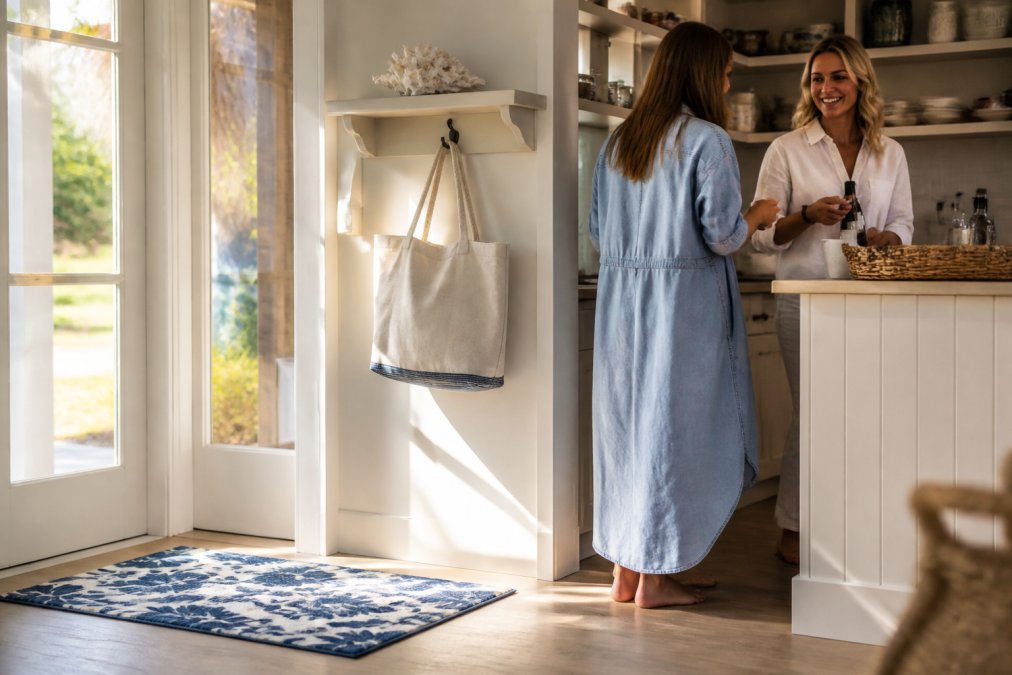
Artisan home decor works best when integrated into how a space is actually used, not displayed as a collection separate from daily life.
How to Care for Coastal Pieces So They Actually Last
Longevity is the most underrated sustainability argument. A piece that lasts ten years instead of two is five times less resource-intensive. Most coastal materials are durable when cared for correctly.
Linen clothing: Machine wash cold on a gentle cycle, reshape while damp, and air dry flat or on a hanger. High heat causes shrinkage and weakens the fiber.
Canvas bags and totes: Spot clean with a damp cloth for most spills. Hand wash with mild soap and cold water for deeper cleaning, then air dry completely. Avoid machine washing canvas with brass hardware.
Rattan and wicker: Dust regularly with a soft brush. Wipe with a barely damp cloth, then dry immediately. Prolonged moisture causes rattan to soften. Keep pieces out of direct sun, UV exposure causes brittleness.
Embroidered and printed textiles: Turn inside out before washing to protect detail work. Cold water, gentle cycle, and air drying preserve both the embroidery and base fabric.
Handcrafted decorative pieces: Dust with a soft brush rather than a cloth. Keep away from direct sunlight to prevent fading and away from high-humidity areas.
As noted in the EPA's guidance on sustainable consumption and textile waste, extending the useful life of clothing and home textiles is one of the highest-impact actions available to individual consumers. Buying less and caring for it better is a more effective sustainability strategy than buying "green" products at the same volume.
Fast fashion coastal decor and clothing flood the market every spring, and most of it is gone, faded, broken, or donated by fall. The alternative is a more deliberate approach: fewer pieces, chosen for material quality and genuine craft, cared for so they last. Palms 30A offers a curated collection built around exactly this philosophy, with handcrafted jewelry, original art pieces, versatile clothing for women, men, and children, and home accessories designed to add warmth rather than clutter. View all collections at Palms 30A and find the pieces worth keeping.
Frequently Asked Questions
Is coastal decor out of style?
Timeless coastal decor, think organic cotton textiles, handcrafted ceramics, jute rugs, and a neutral palette with soft blues, remains consistently popular. What cycles in and out are trendy nautical clichés like anchor motifs and rope accents. Pieces built around natural textures, artisanal craftsmanship, and a calm, beach-inspired color story tend to outlast seasonal trends by years, which is exactly why investing in quality over fast-fashion decor makes financial sense.
How do I identify sustainable coastal clothing brands?
Look for brands that disclose their materials (organic cotton, linen, or recycled fabrics), name their manufacturers, and avoid vague claims like 'eco-friendly' without specifics. Handcrafted and artisanal labels often have shorter, more transparent supply chains than mass retailers. Small boutiques that curate from independent makers, rather than dropshipping generic inventory, are generally a safer bet for ethical sourcing. Ask directly about return policies and material care guides; brands confident in quality answer clearly.
What are some sophisticated coastal decor ideas that avoid nautical clichés?
Skip the rope mirrors and anchor throw pillows. Instead, build around natural textures: woven rattan trays, linen table runners, embroidered cotton kitchen towels, and handcrafted seashell accents in unexpected colorways. A neutral palette anchored by soft blues and warm whites reads as coastal without screaming 'beach house gift shop.' Original artwork and custom-designed artisan pieces add personality that mass-produced nautical decor simply cannot replicate.
Can I shop curated coastal style online and still get something that feels special?
Yes, provided the retailer offers genuinely curated selections rather than algorithmic product feeds. Boutiques that feature original artwork, handcrafted jewelry, and limited-run clothing carry pieces that feel considered. Look for detailed product descriptions that explain the maker or the design story. A $22 custom-designed handcrafted seashell or a $48 canvas tote featuring original artwork carries more meaning than a mass-produced equivalent at a similar price point.
What's the difference between a curated coastal boutique and a fast-fashion retailer selling beach styles?
Fast-fashion beach collections rotate every few weeks, use synthetic fabrics, and rarely disclose who made them. A curated coastal boutique selects fewer pieces with intention, prioritizing material quality, versatile silhouettes, and artisan or independent makers. The price per wear on a $109 maxi dress built for resort and everyday wear typically beats a $30 synthetic alternative that fades or pills after a season. The real cost difference is in longevity, not the sticker price.
This article was written using GrandRanker