 how-to
How to Care for Handmade Jewelry: Complete Guide
Last Updated: October 22, 2026
Quick Summary
To care for handmade jewelry, wipe each piece with a soft microfiber cloth after wearing, wash metal gently with mild soap and warm water, and keep clay and porous pieces dry. Store handmade jewelry separately in a lined box in a cool, dry place away from steam and sunlight.
- Use a soft microfiber cloth, mild soap, warm water, and a soft-bristled brush as your basic supplies.
- Inspect each piece for loose stones, bent posts, or lifted plating before you clean it.
- Never soak polymer clay, porous stones, plated metals, glued settings, or leather and cord.
- Store pieces separately in a lined box with an anti-tarnish strip to slow tarnish.
- Put jewelry on last and take it off first to limit contact with perfume and lotion.
Table of Contents
- Why Handmade Jewelry Needs Its Own Care Routine
- What You'll Need Before You Start
- How to Clean Artisan Jewelry Step by Step
- Clay Jewelry Care: Keeping Polymer Pieces Intact
- How to Store Handmade Jewelry So It Lasts
- How to Prevent Jewelry From Tarnishing
- Common Mistakes That Damage Handmade Jewelry
- Conclusion
- Frequently Asked Questions
Why Handmade Jewelry Needs Its Own Care Routine
Handmade jewelry is wearable art, and it needs gentler handling than mass-produced pieces.
This guide covers exactly how to care for handmade jewelry, from daily habits to long-term storage.
Here's what most care guides get wrong: they treat all jewelry the same.
The good news is that a careful routine takes minutes a week. And it protects pieces you may have bought to mark a trip, a wedding, or a milestone.
What You'll Need Before You Start
Gather a few basic supplies before you touch a single piece. You probably own most of them already.
- A soft microfiber cloth (lint-free)
- Mild soap, such as a gentle hand soap or dish soap
- A small bowl of warm water
Skip anything harsh. Paper towels can scratch. Tissues leave lint. Abrasive cleaners and silver dips are too strong for most artisan finishes.
How to Clean Artisan Jewelry Step by Step
Cleaning artisan jewelry safely comes down to matching the method to the material, then working slowly. Most pieces need only a light touch, but the right touch differs by piece.
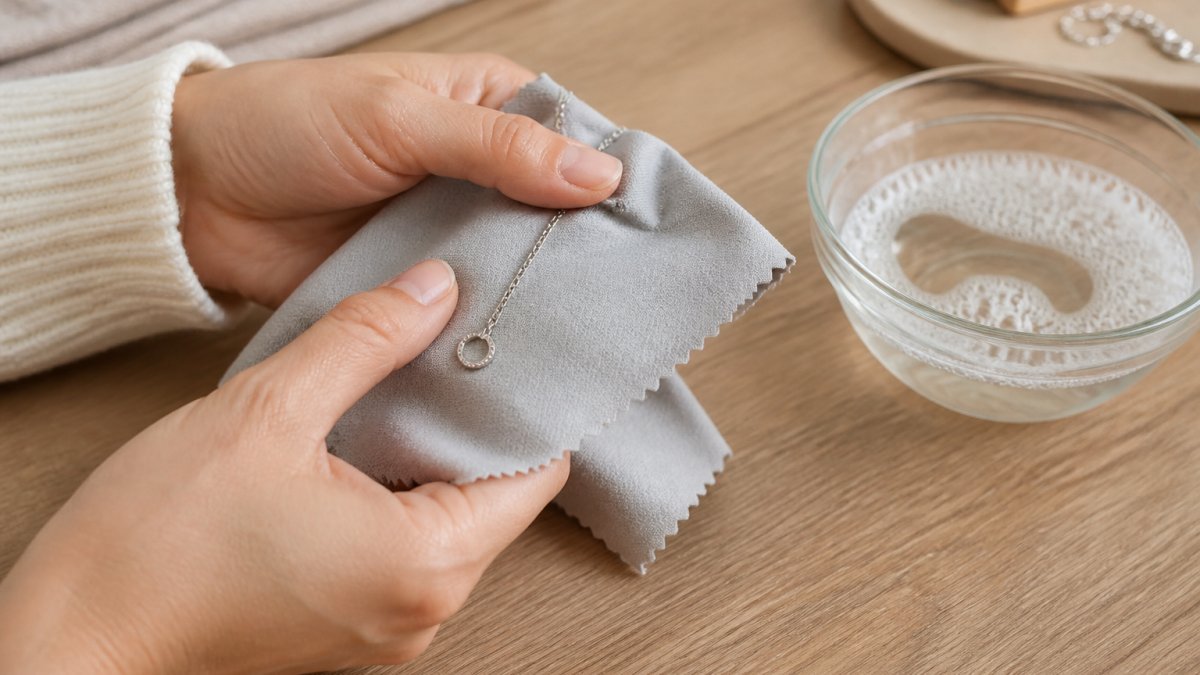
Start with the universal steps that apply to nearly everything:
- Lay the piece on a soft cloth. Work over a towel so nothing rolls onto the floor.
- Inspect before you clean. Check for loose stones, bent posts, cracked clay, or lifted plating. Cleaning a compromised piece can finish it off.
- Mix a drop of mild soap into warm water. Warm, not hot. Hot water can loosen settings and soften glue.
- Wipe with a damp cloth. Go slowly around stones, clasps, and textured surfaces.
- Dry completely before storing. Pat with a dry cloth, then let the piece air dry on a tray before it goes back in the box.
From there, the method splits by material. This is the part most guides skip.
Sterling Silver and Gold-Filled Metals
Sterling silver and gold-filled pieces tolerate mild soap and water. Use a soft-bristled brush only in crevices, and dry thoroughly, especially around clasps and jump rings where water hides. Gold-filled jewelry has a thick layer of gold bonded to a base metal; it still dislikes abrasive polishes, which can thin the surface over time. For a deeper clean on silver or gold, our Radiance Wash Luxury Jewelry Cleaner is a gentle option.

Plated Metals and Costume Pieces
Plated jewelry is a thin layer over a base metal, and every cleaning removes a little of that layer. Wipe with a barely damp cloth, dry immediately, and never use a brush or polish on plated surfaces. Skip silver dips entirely; they are formulated for sterling and can strip plating.
Polymer Clay
Wipe clay with a dry or barely damp cloth and never soak it. Water can cloud the finish and weaken glued parts, and a brush can scratch the surface. If a clay piece needs more than a wipe, stop rather than improvising.
Beads, Resin, and Mixed-Media Pieces
Beaded strands and resin pieces vary widely. Resin tolerates a quick damp wipe but dislikes alcohol and heat. Beaded pieces should be wiped around the string or wire rather than soaked, since water can weaken some cords and loosen knots. For mixed-media pieces, clean the most delicate component first and assume the whole piece is only as tough as its weakest part.
Gemstones and Pearls
Most durable gemstones handle mild soap and water, but porous stones like turquoise, opal, and pearl absorb moisture and should be wiped with a soft damp cloth only, then dried at once. Pearls are soft and scratch easily, so keep them away from other jewelry during cleaning and storage.
Gentle Washing With Mild Soap and Warm Water
Mild soap and warm water are the safest combination for most metal and stone pieces. A few drops in a small bowl is plenty. Swirl the piece gently, don't scrub, rinse with clean water, and pat dry. One caution: water can get trapped behind stones or inside hollow settings. Dry those areas carefully, and don't submerge pieces with glued components.
When Not to Use Water or a Brush
Some handmade pieces should never touch water. This is the part most guides skip.
- Polymer clay: water can cloud the finish and weaken glued parts
- Porous stones like turquoise, opal, or pearl: they absorb moisture
- Painted or sealed surfaces: water and brushes wear the coating
For these pieces, wipe with a dry soft cloth only. That's it.
Clay Jewelry Care: Keeping Polymer Pieces Intact
Clay jewelry care is mostly about what you avoid. Polymer clay is durable but not indestructible.
Our Sand Dollar Handmade Clay Earrings and Elegant Daisy Handmade Clay Earrings are lightweight polymer clay on hypoallergenic posts. They hold up well with the right habits.
Radiance Wash Luxury Jewelry Cleaner →

Keep these rules in mind:
- Wipe with a dry or barely damp cloth, never soak
- Store flat or hanging, not tossed in a bag
- Keep away from perfume, hairspray, and lotions
If a post feels loose, stop wearing the piece and have it repaired.
How to Store Handmade Jewelry So It Lasts
Storing handmade jewelry well is the single biggest factor in how long it lasts. Air, moisture, and friction do the most damage.
Follow these habits:
- Store pieces separately to prevent scratches and tangling
- Use a lined jewelry box or individual soft pouches
- Keep the box in a cool, dry place
For travel, use a small padded case and pack each piece in its own pouch. Don't toss jewelry loose into a toiletry bag.
| Storage Problem | Fix | Why It Matters |
|---|---|---|
| Pieces tangled together | Separate pouches | Prevents scratches and knots |
| Tarnish appearing fast | Airtight box with anti-tarnish strip | Limits moisture and air exposure |
| Clay pieces warping | Store flat in a rigid case | Keeps shape intact |
| Ear wires bending | Hang or use a divided tray | Protects delicate posts |
How to Prevent Jewelry From Tarnishing
Tarnish is a surface reaction, and moisture, sulfur, and chemicals speed it up. You can slow it down with a few daily habits, but the right habits depend on the metal.
Put jewelry on last. Perfume, lotion, and hairspray should dry before a piece goes on. Take jewelry off first at night.
Other habits that help:
- Remove pieces before swimming, showering, or washing dishes
- Keep jewelry away from chlorine and salt water
- Wipe each piece after wearing to remove oils and sweat
Why Sterling Silver Tarnishes and How to Slow It
Sterling silver is 92.5 percent silver alloyed with another metal, usually copper. The copper reacts with sulfur compounds in the air and on skin, which is why silver darkens faster in humid rooms and on pieces worn often. An airtight box with an anti-tarnish strip limits exposure, and a quick wipe after wear removes the oils and sweat that accelerate the reaction. Store silver away from wool, rubber, and newspaper, which can release sulfur over time.
Plated and Gold-Filled Pieces
Plated jewelry does not tarnish the way sterling does, but the plating can wear thin and reveal the base metal underneath. The fix is prevention: wipe after wear, keep pieces dry, and avoid abrasive polishes that speed wear. Gold-filled pieces behave more like solid gold and mostly need the same wipe-and-store routine as sterling.
Troubleshooting Tarnish and Discoloration
When tarnish does appear, match the fix to the piece. A soft polishing cloth is safe for sterling and gold-filled metals. Silver dips work on sterling but can damage plated pieces, porous stones, and antiqued finishes, so read the label before using one. For plated jewelry, a gentle wipe is the only safe option; polishing removes plating.
Loose Findings, Broken Clasps, and When to Stop
Check clasps, jump rings, and ear wires before they fail. A loose post or a bent clasp is a repair, not a cleaning problem, and continuing to wear it risks losing the piece. Stop cleaning and contact the maker or a jeweler if a stone feels loose, a glued component shifts, plating is flaking, or a clasp no longer closes securely.
Common Mistakes That Damage Handmade Jewelry
A few common mistakes cause most of the damage we see. Avoiding them is easier than repairing the results.
- Soaking everything in soapy water. Some pieces should stay dry.
- Using a rough brush or toothpaste. Both scratch soft metals and finishes.
- Storing pieces in a tangled pile. Scratches and bent posts follow.
A common mistake is waiting until a piece looks dull to clean it. Light, regular care beats a deep clean every time.
Conclusion
Caring for handmade jewelry takes minutes, not hours. Wipe each piece after wear, wash metal gently with mild soap and warm water, keep clay and porous pieces dry, and store everything separately in a cool, dry place.
At Palms 30A, we curate handcrafted pieces meant to be worn and loved for years. Our Handmade Clay Pearl Top Earrings and other artisan favorites are built to last with the right care.

Frequently Asked Questions
Can you wear handmade jewelry in the shower?
Skip it. Water, shampoo, and body wash strip oils and accelerate tarnish on metal jewelry, and chlorine in tap water is especially hard on sterling silver and gold-plated pieces. Polymer clay earrings can also soften or loosen at the post over repeated exposure. Put handmade jewelry on last when getting ready and take it off before showering, swimming, or washing your hands. If a piece does get wet, dry it thoroughly with a soft cloth right away rather than letting moisture sit on the surface.
How often should you clean handmade jewelry?
Wipe handmade jewelry with a soft cloth after every wear to remove oils, lotions, and dust. Do a deeper clean with mild soap and warm water every two to four weeks for pieces you wear often, and once a season for pieces you rotate. Store handmade jewelry in a cool, dry place between wears, and check settings and posts monthly for looseness. Pieces worn daily near sunscreen or perfume may need cleaning more often, since those products build up quickly on metal and clay surfaces.
What should you avoid using to clean handmade jewelry?
Avoid harsh chemicals, bleach, ammonia-based cleaners, acetone, and abrasive toothpaste, all of which can strip finishes and scratch delicate pieces. Skip ultrasonic cleaners for clay jewelry, pearl-topped pieces, and anything with glued settings. Boiling water and stiff brushes can also damage handcrafted jewelry. Instead, use warm water with a drop of mild soap, a soft brush like a gentle toothbrush for metal only, and a microfiber cloth to dry thoroughly.
How do you care for clay or beaded jewelry?
Clay jewelry care starts with keeping pieces away from perfume, lotions, and hairspray, since oils can dull the surface. Wipe polymer clay earrings with a barely damp soft cloth and dry them immediately; never soak them. Store clay jewelry separately in a cool, dry place so pieces do not press against each other and warp. For beaded pieces, check the string or wire monthly for fraying, and lay them flat rather than hanging heavy strands, which stretches the thread over time.
Good jewelry care starts with good habits. If you're ready to add a handcrafted piece to your collection, Palms 30A can help. Our curated selection includes lightweight clay earrings, artisan accessories, and thoughtful gifts for the whole family. Visit us to explore pieces made to be worn and cared for. Get started with Palms 30A and find your next little luxury.