 comparison
Is Artisanal Home Decor Worth the Investment? A 2026 Review
Table of Contents
- The Real Question: Is Artisanal Home Decor Worth the Investment?
- Artisanal vs. Mass-Produced Home Decor: What Actually Differs
- How to Choose Handmade Home Decor You Won't Regret
- Quality Home Decor Worth Investing In: A Piece-by-Piece Review
- Caring for Handmade Home Decor So It Lasts
- When Artisanal Home Decor Isn't Worth It
- Conclusion: Making the Call for Your Home
- Frequently Asked Questions
Last Updated: October 12, 2026
The Real Question: Is Artisanal Home Decor Worth the Investment?
Is artisanal home decor worth the investment? For many households, yes: handmade pieces tend to hold up longer, carry real character, and often cost less per year of use than fast replacements. At Palms 30A, we see this play out with every ceramic bowl and hand-blown candleholder that leaves our shelves.
Mass-produced decor wins on one thing only: the sticker price. Everything else, from material quality to how a piece ages, tends to favor the handmade side. Below, we break down where the money actually goes, how to spot genuine craftsmanship, and when a $15 hand-painted oyster shell makes more sense than a $200 factory-made centerpiece.

The short answer: artisanal home decor is worth the investment when you buy fewer pieces and keep them longer. A single well-made object usually outlasts three cheap ones.
Artisanal vs. Mass-Produced Home Decor: What Actually Differs
Artisanal and mass-produced decor differ in three ways: how they're made, what they're made from, and how consistently they're finished. A factory line optimizes for speed and uniformity. A craftsperson optimizes for the individual object in front of them.
That difference shows up in small details. Hand-painted oyster shells carry slight variations in brushwork because a person painted each one. A hand-blown glass candleholder shows subtle gradient shifts that a mold can't replicate.
Neither approach is automatically "better" in every case. But if you care about longevity and character, the handmade route usually wins.
Materials and Construction
Materials separate the two categories faster than anything else. Mass-produced decor often uses resin, particleboard, or thin metal because those materials are cheap to shape at volume.
Handmade pieces tend to use materials that age well: stoneware, porcelain, hand-blown glass, solid wood. These cost more upfront because the raw material itself costs more.
Construction matters too. A hand-thrown ceramic bowl has walls of varying thickness, which is a sign of human work. A molded bowl has perfectly even walls, which is a sign of a machine.
Where the Price Difference Comes From
The price gap comes down to labor, materials, and volume. A factory can produce thousands of identical vases in a day. A single potter might finish a handful in the same time.
That labor cost is real, and it's the main reason handmade decor costs more. There's no secret markup hiding in the middle. You're paying for the hours a person spent making your specific piece.
Volume plays a role too. When a maker produces 20 candleholders instead of 20,000, they can't spread tooling and setup costs across thousands of units. Each piece carries more of that fixed cost.
So when a handmade bowl costs more than a factory one, the difference usually traces back to a person's time. That's the honest answer, and it's worth saying plainly.
How to Choose Handmade Home Decor You Won't Regret
Choosing handmade home decor comes down to three checks: look at the finish, ask who made it, and confirm the material. Skip any one of those and you're guessing.
A common mistake is buying on aesthetic alone. A piece can look beautiful in a photo and still be poorly finished on the underside or the back edge. Turn it over before you commit.
Ask the seller who made the piece. If they can't tell you, that's a signal. Genuine craft operations usually know their makers by name.
Signs of Genuine Craftsmanship
Genuine craftsmanship shows up in details a machine won't bother with. Look for these markers:
- Slight variations between pieces in the same set, which indicate handwork
- A finished underside or back, not just the visible surface
- Even glaze or paint with no drips or thin patches
- Weight that feels solid relative to size
- A maker's mark, signature, or tag identifying the source
One more thing most guides skip: ask how the piece is meant to be used. A decorative bowl and a serving bowl look similar but handle heat and moisture differently. Knowing the intended use prevents most regrets.
Quality Home Decor Worth Investing In: A Piece-by-Piece Review
Quality home decor worth investing in shares one trait: it earns its place. It gets used, displayed, and kept. Below are five pieces from our collection that fit that description, with honest notes on each.
| Piece | Price | Material | Best For |
|---|---|---|---|
| Hand Painted Oyster Shells | $15.00 | Hand-painted shell | Small gifts, shelf styling |
| Artichoke Flower Holder | $32.00 | Handmade ceramic | Tabletop centerpieces |
| Blue & White Bowl Ceramic 12" | $60.00 | Handcrafted ceramic | Serving and display |
| Set of 3 Candlestick Holders | $79.00 | Hand-blown glass | Dining tables, mantels |
| Confetti Coast Oyster Plate | $179.00 | Hand-painted porcelain | Entertaining, collections |
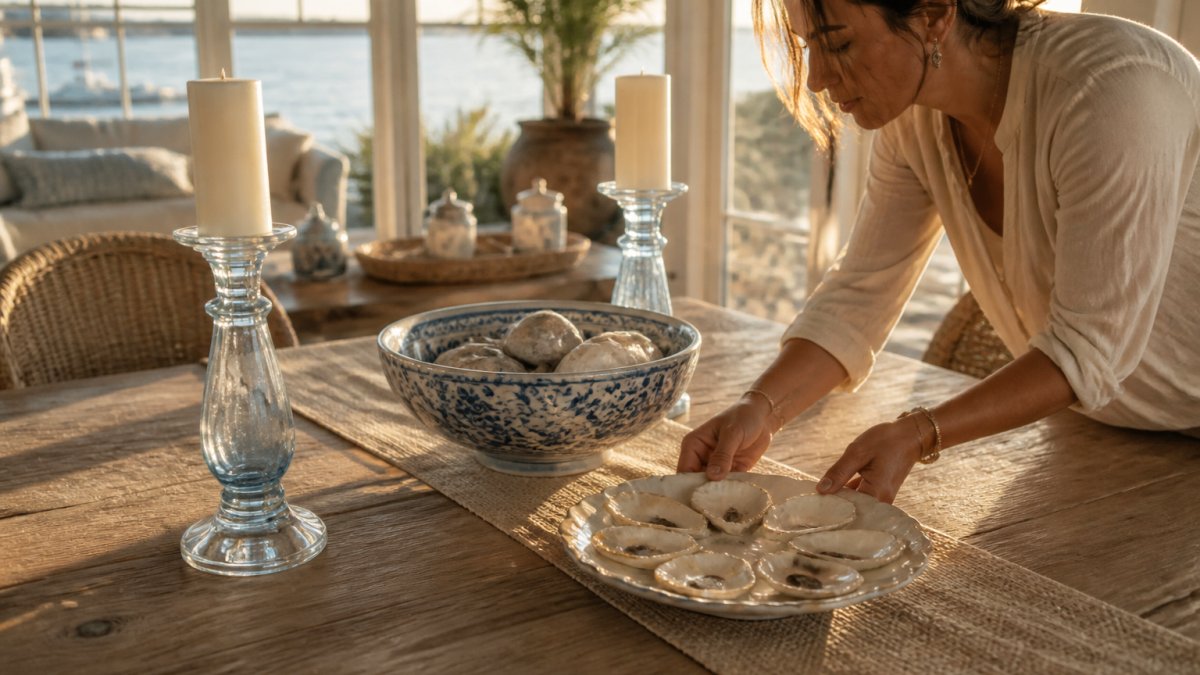
The Hand Painted Oyster Shells are the easiest entry point at $15.00. Each shell is individually painted, so no two match. They work as trinket accents, shelf styling, or a small gift for someone who loves the coast.

The Artichoke Flower Holder at $32.00 is handmade ceramic, sized for a tabletop. It holds a bouquet or stands alone as a centerpiece.
The Blue & White Bowl Ceramic 12" at $60.00 is the workhorse. The 12-inch size handles salads, fruit, or pasta, and the cobalt Chinoiserie pattern holds up as standalone decor when it's not in use.
The Set of 3 Candlestick Holders at $79.00 are hand-blown glass with gradient color options. The tapered design suits a dining table or a mantel.
At the top end, the Confetti Coast Oyster Plate at $179.00 is hand-painted porcelain with a 9-inch round shape. It's the piece you buy once and keep on display.
Caring for Handmade Home Decor So It Lasts
Caring for handmade home decor mostly means avoiding sudden temperature changes and harsh cleaners. Handmade ceramics and glass tolerate daily use well, but they don't like thermal shock.
Wash ceramic and porcelain pieces by hand when you can. A soft sponge and mild soap handle almost everything. Skip the dishwasher for anything hand-painted, since heat and detergent can dull the finish over time.
For hand-blown glass, dust with a dry or barely damp cloth. Avoid stacking candleholders directly against each other, since glass-on-glass contact causes most chips.
Hand-painted shells need the least care. Keep them out of direct sun to slow fading, and dust gently. That's it.
When Artisanal Home Decor Isn't Worth It
Artisanal home decor isn't worth it in a few honest cases. If a piece is purely seasonal, disposable, or likely to be replaced within a year, a cheaper option makes sense.
High-traffic rentals are another case. If you're furnishing a space you'll leave soon, or one where items get knocked around constantly, the premium doesn't pay back.
Trend-driven accent pieces also fall into this bucket. If you're buying something because it's popular this season, you'll probably want to replace it next season. That's not a good home for a handmade piece.
The honest rule: buy artisanal for the pieces you'll keep. Buy mass-produced for the pieces you won't.
Conclusion: Making the Call for Your Home
The decision comes down to how long you plan to keep the piece. Handmade decor costs more upfront and pays that back over years of use, not months. If you're furnishing a home you'll stay in, the math favors artisanal almost every time.
At Palms 30A, we curate the pieces we'd keep in our own homes: hand-painted oyster shells, handmade ceramic vessels, hand-blown glass candleholders, and original art. Every item is chosen to add warmth and style without feeling disposable.
If you're ready to invest in pieces that last, browse our home collection. Start with one piece you'll actually use, and let it earn its place.
Frequently Asked Questions
Is artisanal home decor worth the higher price?
It depends on the piece and how you use it. A handcrafted ceramic bowl or hand-blown glass candleholder is made in small batches with materials and techniques that mass production skips. That means fewer pieces exist, each one varies slightly, and the object often holds up better over years of daily use. If you want decor that stays in your home long-term rather than getting replaced every season, the higher upfront cost can make sense.
What makes handmade home decor different from mass-produced decor?
The main differences are materials, construction, and consistency. Mass-produced decor is made in large runs where every unit looks identical. Handmade pieces are shaped, painted, or blown individually, so no two are exactly alike. A hand-painted oyster shell, for example, has unique brushwork that a factory-printed version cannot replicate. That variation is the point, not a flaw, and it is what you are paying for when you choose artisan work.
Which home decor items are worth spending more money on?
Focus on pieces you use or see daily: tabletop items, serveware, and statement accents. A handcrafted 9-inch porcelain oyster plate or a 12-inch ceramic bowl earns its cost through regular use at meals and gatherings. Smaller accents like hand-painted oyster shells at $15 let you add artisan character without a big commitment. Skip the splurge on items that sit in storage or follow short-lived trends.
How do you care for handmade home decor?
Care depends on the material. Hand-painted porcelain and ceramic pieces should be washed by hand with mild soap and a soft cloth to protect the painted details. Hand-blown glass candleholders need gentle handling and a soft, dry cloth rather than abrasive scrubbers. Keep handmade pieces out of direct harsh sunlight to slow fading. Storing fragile items with padding between them prevents chips during seasonal rotation.
How can you decorate with handmade pieces without overspending?
Start with one or two anchor pieces and build around them. A single hand-blown glass candleholder set or a hand-painted ceramic vessel can carry a tabletop arrangement on its own. Mix artisan accents with pieces you already own rather than replacing everything at once. Buying one meaningful item per season spreads the cost and keeps your space feeling collected instead of purchased all at once.
The challenge with artisanal decor is knowing which pieces will actually last and which are just pretty. Palms 30A curates handcrafted jewelry, original art, and home accessories so every piece earns its spot in your home. Our collection includes handmade ceramic vessels, hand-painted coastal accents, and hand-blown glass candleholders, all selected for daily use and long-term display. Explore our curated home collection and find the piece you'll keep for years.