 listicle
The Complete Towel Guide: Quality, Care & Selection
Table of Contents
- Understanding Towel Quality: What Makes a Towel Worth Buying
- Towel Types for Every Room and Purpose
- How to Wash Towels to Keep Them Soft and Absorbent
- Weave Types and What They Mean for Performance
- Sustainability and Certification in Towel Production
- Towel Troubleshooting: Common Problems and Solutions
- Choosing the Right Towel Set for Your Home
- Frequently Asked Questions
Last Updated: September 21, 2026
Understanding Towel Quality: What Makes a Towel Worth Buying
A quality towel is one that absorbs water efficiently, maintains softness through repeated washing, and resists pilling or deterioration over time. The best towels combine the right material composition with proper construction techniques that determine how long they'll perform in your home.
The difference in towel performance often comes down to factors like cotton type, weave density (GSM), and construction method.
Understanding these elements helps you choose towels that match your needs and budget.
Material Composition: Turkish Cotton, Egyptian Cotton, and Supima
The origin and grade of cotton dramatically affects how your towel performs. Turkish cotton, Egyptian cotton, and Supima cotton represent three distinct quality tiers, each with specific strengths.
Turkish cotton produces longer fibers that create stronger yarn, reducing shedding and improving durability. Turkish cotton towels are often plush and quick-drying, making them popular for everyday use.
Egyptian cotton has exceptionally long, fine fibers that create superior softness and absorbency. These towels often cost more but are known to maintain integrity through many wash cycles.
Supima cotton, often considered a high grade, has long and strong fibers. Supima towels are known to stay soft, resist fading, and absorb water efficiently.
Standard cotton often has shorter fibers. While cheaper upfront, premium cotton's longevity can be a factor if you keep towels for an extended period.
What Is GSM and Why It Matters
GSM (grams per square meter) measures towel density. Higher GSM means more fibers packed together, correlating with better absorbency, softness, and durability.
Lightweight towels (300-400 GSM) dry quickly and work well for travel or beach use, but lack the plushness of heavier options.
Mid-weight towels (400-600 GSM) represent the sweet spot, offering excellent absorbency and soft feel without excessive weight or drying time.
Heavyweight towels (600+ GSM) feel plush and absorb generously but take longer to dry and require more storage space.
The ideal GSM depends on your use case. For kitchen towels used daily, 400-500 GSM can provide good function without excessive bulk. For bath towels, 500-700 GSM is often considered for a more indulgent feel. For beach towels where quick-drying matters, 300-400 GSM can work well.

Towel Types for Every Room and Purpose
Different rooms and uses call for different towel specifications. Understanding these distinctions helps you build a practical collection that performs well everywhere in your home.
Bath Towels and Bath Sheets
Standard bath towels typically measure 27 by 52 inches. For a good balance of absorbency and quick-drying, Egyptian or Turkish cotton with 500-700 GSM is often recommended.
Bath sheets (35 by 60 inches) offer extra coverage and can provide a sense of luxury, though they may require more storage and take longer to dry.
Hand Towels and Washcloths
Hand towels (16 by 28 inches) are generally designed to absorb quickly and dry fast. 400-500 GSM can work well for lighter drying tasks.
Washcloths (12 by 12 inches) can have enough texture for gentle exfoliation. Long-staple cotton with slightly lower GSM can allow for faster drying and easier wringing.
Kitchen Towels and Beach Towels
Kitchen towels face constant use and benefit from materials that withstand frequent washing. 100% cotton with waffle or herringbone weave is often recommended for enhanced absorbency and quick-drying.
Beach towels often prioritize quick-drying and durability. 300-400 GSM Turkish cotton or blends that dry rapidly are frequently sought after.
How to Wash Towels to Keep Them Soft and Absorbent
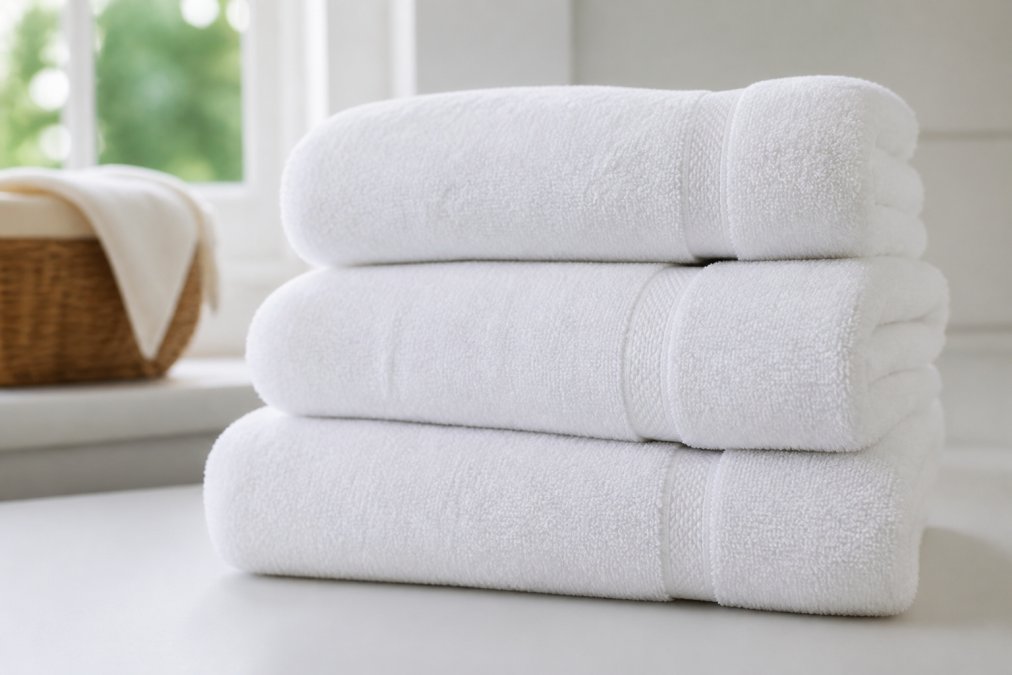
Washing towels correctly can help preserve softness and extend their lifespan. Washing them like regular clothes may sometimes damage fibers.
Wash towels separately from other items to prevent pilling and fiber breakdown. Use warm water, as hot water can sometimes weaken fibers or fade color.
Use slightly less detergent than recommended. Excess detergent leaves residue that stiffens towels and reduces absorbency.
Avoid fabric softener. It can coat fibers with residue that may reduce absorbency.
Dry towels on a medium heat setting, as high heat can damage cotton fibers and cause shrinkage. Removing towels from the dryer while slightly damp and folding them immediately can help prevent wrinkles and allow the fibers to finish drying in a relaxed state.
Wash towels every three to four uses for bathroom towels, and after every use for kitchen towels. Frequent washing can help prevent bacteria buildup and keep towels fresher. A quick wash with minimal detergent every few days can be beneficial.
Weave Types and What They Mean for Performance
The way cotton fibers are woven together determines how the towel performs in terms of absorbency, durability, and feel.
Terry Cloth, Waffle Weave, and Herringbone Weave
Terry cloth is the most common towel weave and features loops of yarn that create the absorbent surface. These loops trap water and create the plush feel associated with quality towels. Terry cloth can work well for bath towels and hand towels because the loops maximize water absorption. However, loops can snag and eventually pill if the towel is made from shorter fibers.
Waffle weave creates a grid pattern with small pockets that absorb water and can dry faster than terry cloth. Waffle weave towels are often thinner and lighter, making them suitable for kitchen use and travel. The Belize Butterflies Microfiber Kitchen Dish Towel from Palms 30A features a high-performance waffle weave that powers through dirt and grime while drying five times faster than standard cotton.
Herringbone weave creates a diagonal pattern that can combine durability with absorbency. This weave is often slightly less absorbent than terry cloth but can resist pilling better and maintain its appearance through many wash cycles. The Large TN Icons Tea Towel and Bengal Tiger Stripe Tea Towel from Palms 30A both feature herringbone weave construction, creating towels that are both decorative and functional.

Each weave serves different purposes. Terry cloth is often preferred in bath towels where maximum absorbency is a priority. Waffle weave is frequently used for kitchen towels where quick-drying is essential. Herringbone weave can work well for decorative kitchen towels that need to maintain their appearance while performing reliably.
Sustainability and Certification in Towel Production
Environmental impact matters increasingly to consumers selecting home goods. Understanding certifications helps you identify towels made with responsible practices.
Organic cotton towels are grown without synthetic pesticides or fertilizers, which can reduce environmental impact during cultivation. Organic cotton often requires more careful farming practices. Look for towels certified by GOTS (Global Organic Textile Standard), which verifies that cotton was grown organically and processed responsibly.
The Italian Coastal Swedish Cloth Set from Palms 30A exemplifies eco-friendly design, featuring dishcloths made from materials that dry quickly and are antibacterial for hygienic cleaning with reduced waste. These reusable cloths replace disposable sponges and paper towels, making them a sustainable choice for environmentally conscious households.
Oeko-TEX certification indicates that a towel has been tested for harmful substances and meets strict safety standards (OEKO-TEX® STANDARD 100).
Towel Troubleshooting: Common Problems and Solutions
Understanding common towel problems helps you identify quality issues before they become frustrating.
Choosing the Right Towel Set for Your Home
Building a practical towel collection means selecting pieces that work together and match your household's actual needs.
| Towel Type | Best GSM Range | Ideal Material | Primary Use |
|---|---|---|---|
| Bath Towel | 500-700 | Egyptian or Turkish Cotton | Daily bathing |
| Bath Sheet | 500-700 | Egyptian or Turkish Cotton | Luxury use |
| Hand Towel | 400-500 | Turkish or Supima Cotton | Bathroom drying |
| Kitchen Towel | 400-500 | Cotton or Polyduck | Dish drying and spills |
| Beach Towel | 300-400 | Turkish Cotton | Quick-drying use |
| Washcloth | 350-450 | Long-staple Cotton | Face and body washing |
Frequently Asked Questions
What GSM should I look for in a high-quality towel?
GSM (grams per square meter) measures towel weight and density. Most quality everyday towels range from 400 to 600 GSM. Towels under 400 GSM tend to be lightweight and quick-drying but less plush. Towels between 500-600 GSM offer excellent absorbency and softness for bath and hand towels. Premium spa-quality towels often exceed 700 GSM, providing maximum plushness but requiring longer drying times. Choose based on your priority: quick-dry efficiency favors lower GSM, while luxury and absorbency favor higher GSM.
How do I choose between Turkish cotton and Egyptian cotton towels?
Turkish cotton features shorter fibers and typically produces thicker, fluffier towels with excellent absorbency. Egyptian cotton uses longer staple fibers, creating softer, more durable towels that are known to resist pilling over time. Turkish cotton towels can feel plusher immediately but may shed slightly when new. Egyptian cotton towels often develop softness gradually and can last longer with proper care. For longevity and refined softness, Egyptian cotton is often considered a premium choice. For immediate plushness and absorbency, Turkish cotton can deliver faster results. Both are excellent; your choice depends on whether you prioritize durability or initial luxury feel.
What's the best way to keep towels fluffy and absorbent?
Wash towels separately from other items in warm water with a mild detergent. Avoid fabric softener, as it can coat fibers and reduce absorbency. Dry on medium heat with wool dryer balls to fluff fibers naturally. Remove towels promptly to help prevent wrinkles and musty odors. Wash new towels before first use to remove excess lint. Limiting washing to once or twice weekly can help extend towel life. Avoid bleach unless towels are white, as it can weaken fibers. Store in a dry, well-ventilated space. Replace towels every 2-3 years when they lose absorbency or develop odor despite proper care.
How often should I replace my bath towels?
Quality bath towels can typically last 2-3 years with proper care. Replace them sooner if they develop persistent odors, lose absorbency, show visible wear, or harbor mildew despite regular washing. Heavy-use households may need replacement annually. Towels made from long-staple cotton or those with higher GSM ratings can often outlast budget options. Proper drying (hanging fully or using a dryer) and washing practices can extend towel life significantly. If you notice towels feel stiff, stink after washing, or no longer absorb water effectively, it may be time for replacements. Quality towels can be an investment that offers durability and consistent performance.