 comparison
Is Handmade Jewelry Worth the Investment? A 2026 Review
Table of Contents
- The Honest Verdict: When Handmade Jewelry Is Worth the Investment
- Handmade Jewelry vs Mass-Produced Jewelry: What the Price Difference Buys
- Does Handmade Jewelry Hold Its Value? Resale Evidence and Depreciation
- How to Evaluate Handmade Jewelry Before You Buy
- Custom Handmade Jewelry Cost: What Drives the Premium
- Cost per Wear: A Practical Way to Judge the Price
- A Buyer's Decision Framework: Who Should Buy Handmade, and Who Shouldn't
- Conclusion: Matching the Purchase to Your Reason for Buying
- Frequently Asked Questions
Last Updated: October 13, 2026
The Honest Verdict: When Handmade Jewelry Is Worth the Investment
Is handmade jewelry worth the investment? For most buyers, yes, if you value craftsmanship over resale returns. Handmade jewelry is worth the investment when you measure value by wear, meaning, and durability rather than by what a piece would fetch on the secondary market.
The honest answer depends on what you mean by "investment." A one-of-a-kind pendant you wear weekly for a decade delivers value differently than a stock certificate.
Handmade Jewelry vs Mass-Produced Jewelry: What the Price Difference Buys
The price gap between handmade and mass-produced jewelry pays for three things: better materials, slower construction, and a maker's time. Machine-made jewelry is built for volume, standardized components, fast assembly. Handcrafted jewelry is built one piece at a time, which shows up in details you can see and feel.
Materials, Construction, and Durability
Materials and construction quality separate the two categories more than any label does. Handmade pieces typically use materials the maker chose deliberately, like polymer clay, stainless steel posts, or hand-painted ceramic, with findings attached to last.

Durability follows from those choices. A lightweight polymer clay earring with hypoallergenic posts holds up to daily wear because the material is flexible and the post resists tarnish.
Craftsmanship and the Human Touch
Craftsmanship is the part machine production cannot copy. An artisan makes small decisions on every piece: how a curve sits, how a color pairs, how a charm hangs.
The human touch also means accountability. When something is made by hand, there is a person behind it who can answer questions about care and repair. That relationship is part of what you buy.
Does Handmade Jewelry Hold Its Value? Resale Evidence and Depreciation
Handmade jewelry rarely holds financial value the way gold bullion or a blue-chip stock does. Most handcrafted pieces resell for less than their purchase price, especially pieces made from polymer clay, ceramic, or fabric. That is not a flaw in the product; it reflects how the resale market works. Resale value is not a mystery, it is driven by five identifiable factors you can check before you buy.

The Five Factors That Drive Resale Value
Resale value depends on recognizable brand names, precious metal content, and collector demand. A maker without a secondary market following cannot command resale premiums, no matter how well the piece is made. Buyers who want an asset that appreciates should look at precious metals and certified gemstones, not artisan earrings.
When you evaluate a specific piece, work through these five factors:
- Materials with intrinsic value. Solid gold, sterling silver, and certified gemstones retain some value because the raw material itself has a market. Polymer clay, ceramic, resin, and base-metal findings have little or no scrap value.
- Maker recognition. A piece from a maker with an established collector base, gallery representation, or a documented auction record can resell above its original price. A piece from an unknown maker usually cannot, even if the craftsmanship is equal.
- Condition. Chips, scratches, tarnish, missing stones, and stretched or broken findings all reduce resale price. Pieces worn daily rarely stay in resale-grade condition.
What Depreciation Actually Looks Like
Handcrafted pieces commonly resell for a fraction of retail, often well under half, unless one of the five factors above is unusually strong.
This is not unique to handmade jewelry. Mass-produced fashion jewelry depreciates even faster, no maker story, no documentation, often no durable materials. The difference is that handmade buyers usually are not buying for resale in the first place.
Financial Investment vs Personal-Value Investment
Financial investment and personal-value investment are two different things, and handmade jewelry belongs to the second category.
Most buyers of handcrafted pieces are making the second kind of purchase. That is a legitimate choice, not a consolation prize.
If you want a piece that does both, delivers personal value and retains some resale potential, prioritize solid precious metals, a maker with a documented collector base, and complete documentation at purchase.
How the Federal Trade Commission advises consumers on jewelry advertising claims
How to Evaluate Handmade Jewelry Before You Buy
Evaluating handmade jewelry comes down to inspecting construction, asking about materials, and confirming the maker stands behind the work. You do not need a jeweler's loupe to spot quality. You need a short checklist and a few direct questions.
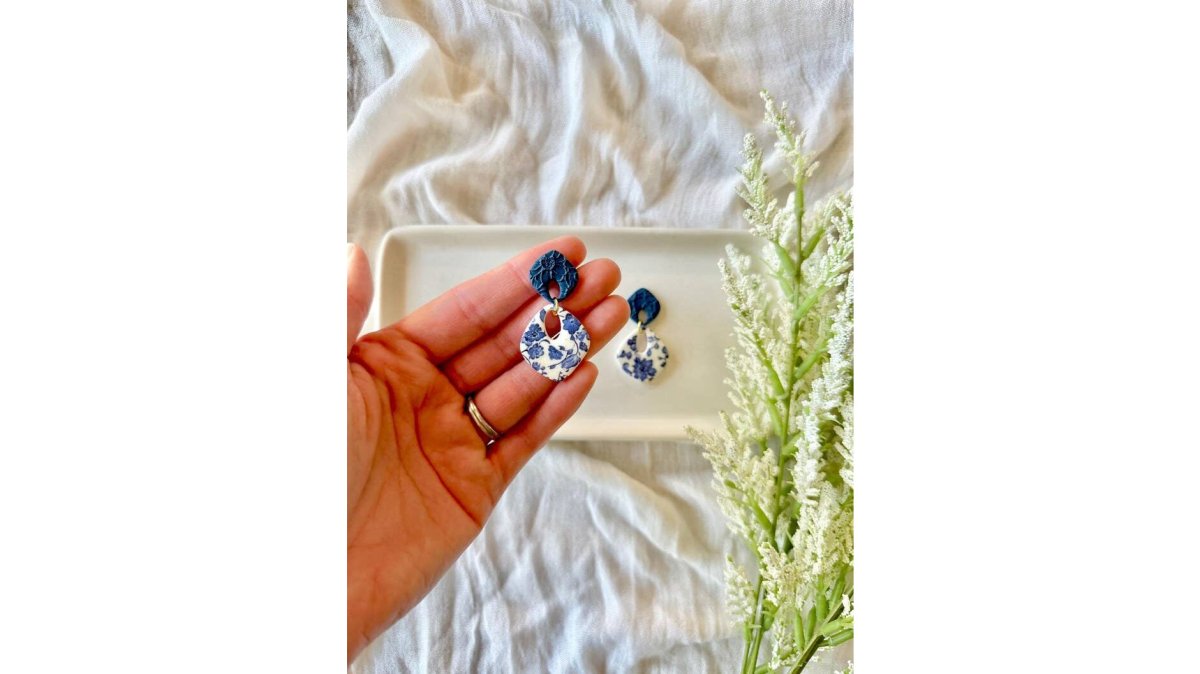
Start with the physical piece. Then ask the seller about materials, care, and repairs. A confident maker answers without hesitation.
- Check that posts, clasps, and findings are securely attached, not glued or loose
- Confirm the material (polymer clay, ceramic, stainless steel, gold plating) and ask about tarnish resistance
- Look for consistent color, clean edges, and symmetrical shapes
Repairs, Warranties, and Aftercare
Repairs, warranties, and aftercare are where independent makers often outperform mass retailers. A small maker can usually repair a broken clasp or reattach a charm because they built the piece.
Ask three questions before you buy: What is the return window? Will you repair a piece if a finding fails? What cleaning method do you recommend? Get the answers in writing, even just by email, that record protects you.
Handmade Clay Pearl Top Earrings →
Custom Handmade Jewelry Cost: What Drives the Premium
Custom handmade jewelry cost reflects labor, materials, and design time, not markup for a label. A commission adds a design phase on top of production: sketches, material selection, and back-and-forth with the client.
The main cost drivers are:
- Labor time: hand assembly, painting, and finishing on every piece
- Materials: higher-grade clay, stainless steel or gold-plated findings, ceramic
- Design work: sketches, color matching, and revisions for commissions
None of these costs disappear when you buy from a small maker. They are simply visible, which is why the price looks higher than a factory equivalent.
Cost per Wear: A Practical Way to Judge the Price
Cost per wear is the simplest way to judge whether a piece earns its price. Divide the purchase price by the number of times you expect to wear it.
But the basic formula misses two things that change the answer: how long the piece actually lasts, and what it costs to keep it wearable. A more honest version is total cost of ownership divided by total wears.
The Full Formula
Total cost of ownership = purchase price + repairs + replacement parts + cleaning supplies − resale value (if any).
Cost per wear = total cost of ownership ÷ total wears over the piece's life.
Run the math on two pieces before you decide. A cheap trend piece you wear three times costs more per wear than a handcrafted piece you reach for weekly.
A Worked Comparison
| Item | Price | Wears per Year | Years Worn | Repairs/Upkeep | Cost per Wear |
|---|---|---|---|---|---|
| Handmade clay earrings | $28 | 100 | 2 | $0 | $0.14 |
| Trend earrings | $12 | 6 | 1 | $0 | $2.00 |
| Hand-painted ceramic charm | $10 | 50 | 3 | $0 | $0.07 |
| Pendant scarf necklace | $29 | 40 | 3 | $0 | $0.24 |
| Plated fashion necklace | $15 | 20 | 1 | $0 | $0.75 |
| Solid silver handmade pendant | $120 | 80 | 10 | $25 (one re-polish) | $0.18 |
The table makes the case plainly. Frequency of wear matters more than the sticker price. The last row shows why a higher-priced piece can still win: a longer lifespan and a small repair budget spread the cost across many more wears.
Three Variables That Change the Answer
- Expected lifespan. A piece with secure findings and tarnish-resistant materials may last years; a glued or plated piece may fail in months. Ask the maker how long they expect the piece to hold up under normal wear.
- Repair and replacement cost. A maker who repairs their own work for a small fee keeps your cost per wear low. A piece that must be replaced entirely resets the math.
- Frequency of wear. This is the variable you control. A piece you wear weekly for years beats a piece you wear twice, no matter the price.
How to Use This Before You Buy
Pick the piece you are considering and estimate three numbers: how often you will wear it, how many years it will last, and what upkeep will cost. Divide. If the result is lower than the mass-produced alternative, the handmade piece is the better value on wear alone, before you count meaning, uniqueness, or the maker relationship.
Consumer guidance on jewelry care and repair from the Jewelers of America
A Buyer's Decision Framework: Who Should Buy Handmade, and Who Shouldn't
Handmade jewelry suits buyers who wear what they own, want something no one else has, and care about who made it. It suits gift-givers looking for a piece with a story, and anyone building a small collection of pieces they will actually wear.
It does not suit buyers who need a guaranteed resale return, want identical replacements years later, or shop purely on lowest price. That is a fair trade, not a flaw.
| If You... | Buy Handmade | Buy Mass-Produced |
|---|---|---|
| Wear jewelry weekly | Yes | Either |
| Want a resale asset | No | No |
| Need identical replacements | No | Yes |
| Value one-of-a-kind design | Yes | No |
| Shop on lowest price | No | Yes |
| Want a meaningful gift | Yes | Either |
Conclusion: Matching the Purchase to Your Reason for Buying
The real question is not whether handmade jewelry is a good investment in the abstract. It is whether a specific piece fits how you will wear it, gift it, or keep it.
At Palms 30A, our handcrafted jewelry collection is built for exactly that kind of buying. You can browse hypoallergenic clay earrings, one-of-a-kind pendant scarf necklaces, and hand-painted ceramic charms, each made to be worn rather than stored.

Frequently Asked Questions
Is handmade jewelry worth the investment?
It depends on what you mean by investment. As a financial asset, handmade jewelry rarely appreciates because there is no liquid resale market the way there is for fine diamonds or signed luxury watches. As a personal-value purchase, it often is worth it: you pay for materials, hours of labor, and a design that is not repeated. At Palms 30A, handcrafted pieces start at $10 for hand-painted ceramic charms and $29 for one-of-a-kind pendant scarf necklaces.
Does handmade jewelry hold its value?
Resale value for handmade jewelry is usually lower than retail price. A buyer on the secondary market is paying for materials and wearability, not for the maker's time, so you should expect to recover only a fraction of what you paid. The exception is a piece from a maker with a documented following. Treat handmade jewelry as something you wear and enjoy, not as an asset you plan to sell.
Is handmade jewelry better quality than mass-produced jewelry?
Not automatically. Quality depends on the maker, not the label. A well-made handmade piece usually has stronger findings, better finishing, and materials chosen for wear rather than for the lowest unit cost. A poorly made handmade piece can be worse than a machine-made one. The advantage of handmade is that a single person inspected the piece before it shipped, which is why small-batch production tends to have fewer defects.
What drives the cost of custom handmade jewelry?
Four things: materials, labor hours, design work, and the size of the run. A custom commission involves a sketch or CAD file, a sample, and one-off production, so the maker's time is spread across a single piece instead of hundreds. That is why a custom piece costs more than an identical design bought off a shelf. If you want the look without the custom price, buy a made-to-order piece from an existing collection.
How can I tell if handmade jewelry is high quality before buying?
Ask three questions. What are the posts and findings made of? Look for lead-free and nickel-free metals, like the hypoallergenic stainless steel and gold-plated posts used in Palms 30A clay earrings. How is the piece finished? Edges should be smooth and paint or glaze should be even. And what is the return policy if it does not hold up? A maker who stands behind the work will answer all three without hesitating.